
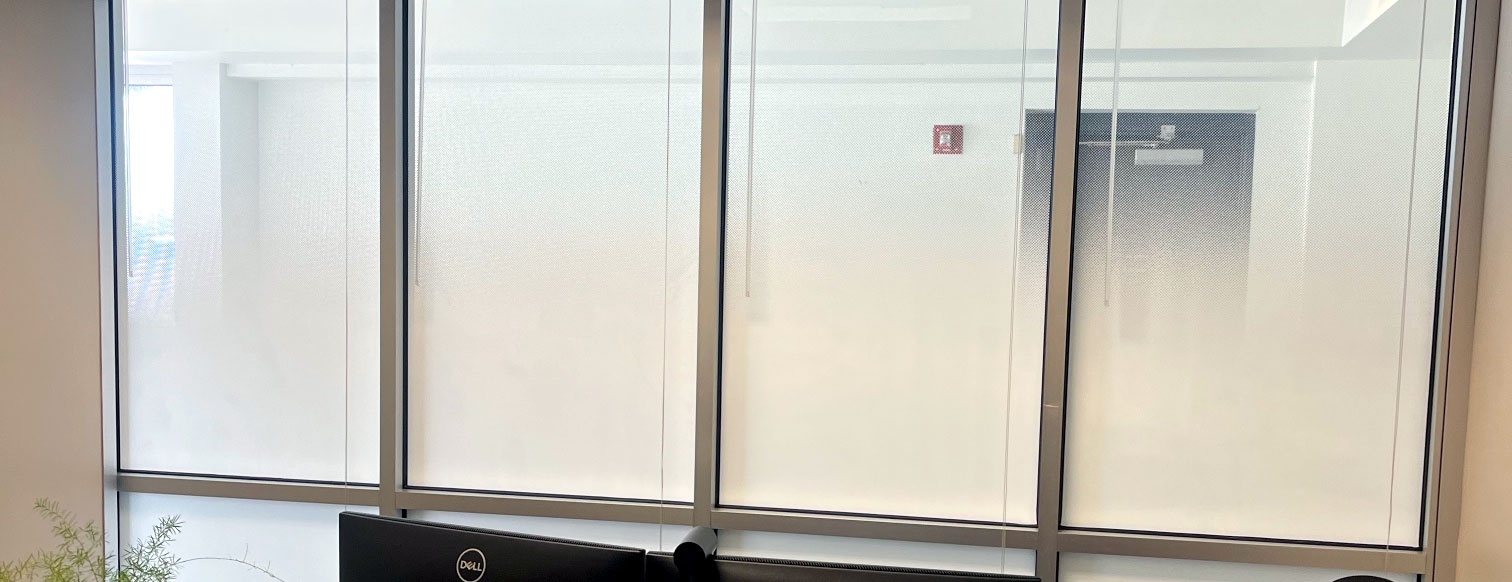
Dot matrix gradients are a popular design technique used in decorative and privacy window films. This method allows designers to create smooth visual fades while maintaining transparency, natural light, and a modern architectural aesthetic.
In commercial spaces, offices, and retail environments, dot matrix gradients are often used to balance privacy with openness. Instead of applying a solid opaque film that blocks visibility completely, the dot pattern gradually changes density across the glass surface to create a soft transition.
How Dot Matrix Gradients Work
A dot matrix gradient works on the same principle as halftone printing. Rather than printing a continuous fade, the effect is created using many small dots that vary in size, spacing, or density. As the dots become more concentrated, the surface appears more opaque. As they become smaller or more widely spaced, the glass appears more transparent.
From a distance, the human eye blends these dots together, creating the illusion of a smooth gradient. Up close, the individual dots are visible, but they are typically designed to be subtle enough that they do not distract from the overall appearance.
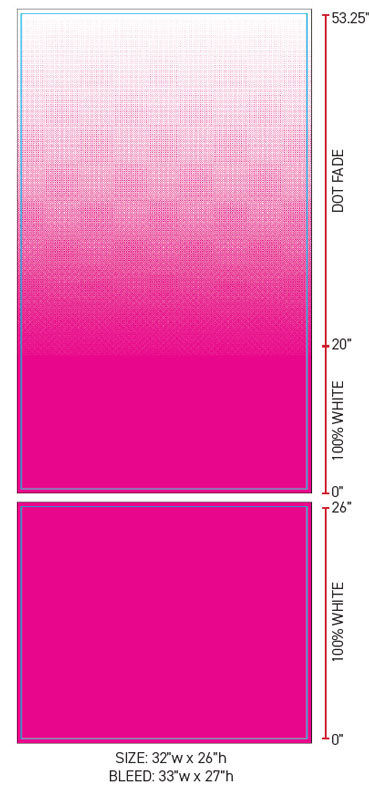
Click to enlarge. Magenta represents white. White represents clear.
Why Dot Matrix Gradients Are Used on Glass
Designers and architects frequently choose dot matrix gradients for several practical and visual reasons.
Privacy Without Blocking Light
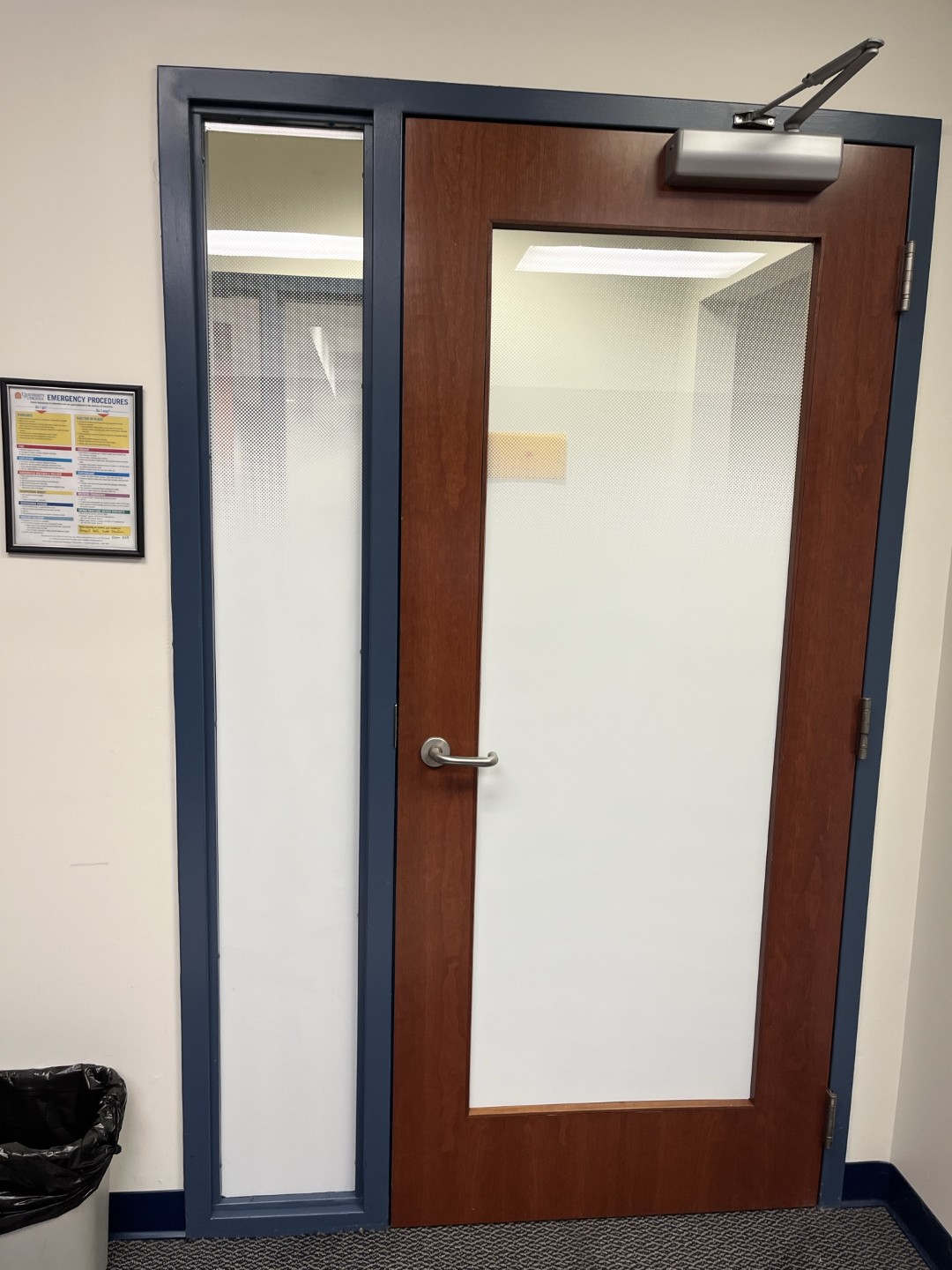
Solid frosted films provide privacy but can make a space feel closed off. A dot matrix gradient allows privacy where it’s needed—such as at eye level—while still letting light pass through the glass.
Smooth Visual Transitions
Instead of abrupt changes between clear and frosted sections, dot matrix patterns create a gradual fade that feels more natural and visually appealing.
Modern Aesthetic
The pattern of dots has become a recognizable design feature in modern offices and commercial spaces. It adds texture and visual interest while maintaining a clean, professional look.
Flexible Design Options
Dot gradients can be customized in many ways, including different dot sizes, shapes, and transition styles. Designers may use circular dots, squares, or other geometric patterns to achieve a unique visual effect.
 Common Applications
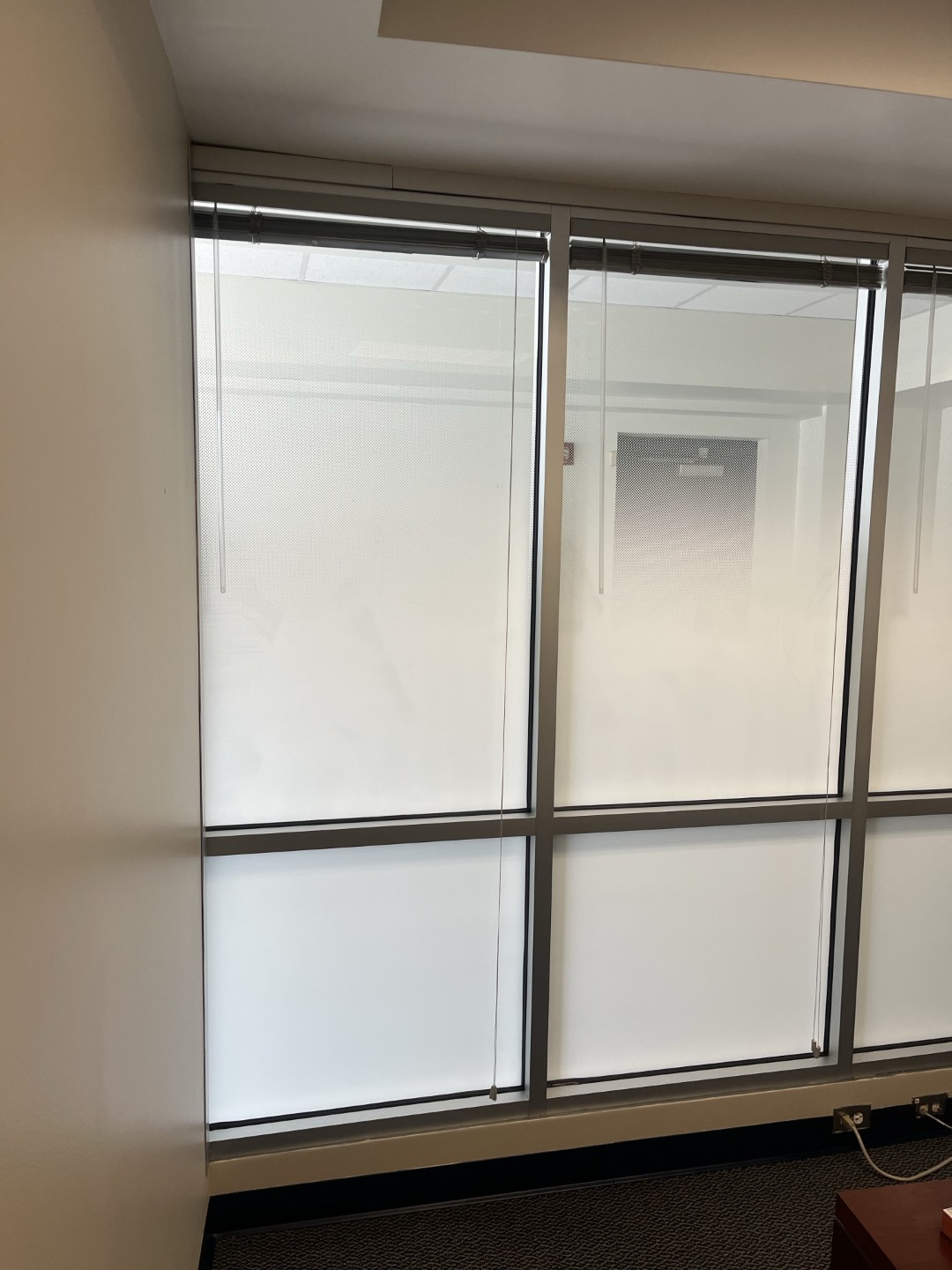
Dot matrix gradients are commonly used in architectural and commercial environments where glass plays a major role in the design. Typical applications include:
- Conference room glass walls
- Office partitions
- Lobby glass features
- Retail storefront windows
- Decorative interior glass panels
In many cases, the gradient starts dense near the bottom of the glass to provide privacy and gradually fades toward the top to maintain visibility and light.
Dot Matrix vs. Perforated Window Film
Dot matrix gradients are sometimes confused with perforated window graphics, but the two are very different. Perforated window film contains tiny holes that allow people inside to see out while displaying graphics on the outside. Dot matrix gradients, on the other hand, are printed patterns that leave parts of the film transparent. They are primarily used for decorative and privacy purposes rather than advertising.
Designing for Print
When preparing artwork for window film printing, designers often create gradients using halftone patterns in design software like Adobe Illustrator. The printer’s RIP software then converts these gradients into precise dot patterns that can be printed onto the film. Proper dot sizing and spacing are important to ensure the gradient prints cleanly and looks smooth when installed on glass.
The Bottom Line
Dot matrix gradients are an effective way to create stylish, functional glass designs that balance privacy and openness. By using carefully spaced dots to simulate a fade, designers can achieve a modern look that enhances both the visual appeal and usability of glass spaces.
Whether used in office interiors, retail environments, or decorative architectural features, dot matrix gradients remain one of the most versatile techniques for printing on window film.
